
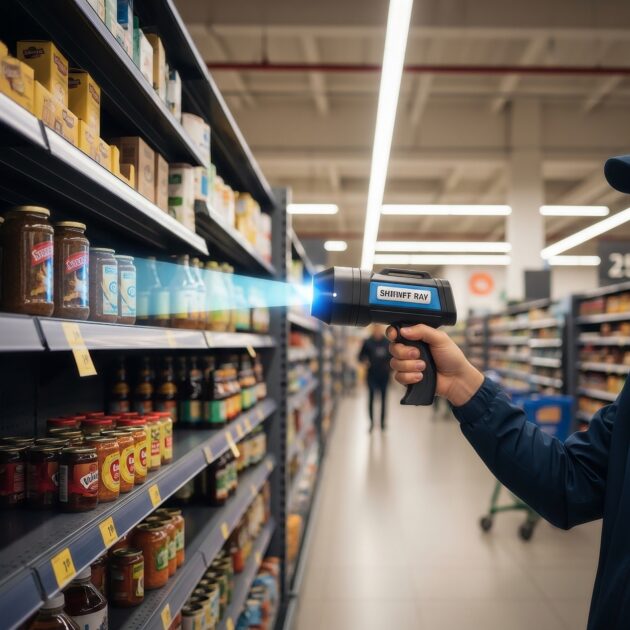
The shrink ray that leaves a better markup.
In a standard grocery aisle, there may be several different brands of the same item. Occasionally there may be only one or two. However, there is a multiple choice option. Sometimes one brand is priced less than another. This might be a marketing technique. Or it might be a gimmick to encourage the purchase of that particular brand. In fact, if there are several different brands offering the same product there will likely be a fair difference between the lowest price and the highest price.
With this in mind, it’s easy and budget friendly, to reach for that cheaper brand. After all it’s the same item. One blue bag of nacho chips is the same as a green bag of nacho chips. The only difference is the dinosaur that is drawn on the green bag. However, the green bag of nacho chips cost more. Considerably more. Therefore the blue bag of nacho chips would be more budget friendly. It’s the same product. The only difference is the style of packaging.

The style of packaging is important, but not because of the cute little dinosaur. The packaging is important because of the shrink ray. Except, that might be slightly ahead of itself. The shrink ray is important, but not because of the packaging. The packaging reveals where the shrink ray made changes. It’s on everything sold in a retail store. The packaging. And it’s full of clues and details.
The Shrink Ray
The shrink ray is real. At least, there’s hard evidence of its after effects. That candy bar that seems smaller? It is. That box of clothes washing powders? The same one that has been on the shelf for years? Replaced by the shrink ray version. Less product, higher price. It doesn’t make sense, unless one factors in the cost of the shrink ray. However, why would a consumer want to pay more, for less? Firstly that is not the way of the thrifty shopper. And secondly, don’t even think about trying to float that past a coupon clipper. It just won’t cut it.
That’s why the packaging is so important. Cute little dinosaur notwithstanding. The packaging lists the weight, or the amount of the product, by weight. Furthermore, there are many additional details printed on the packaging. Especially for food items. For example, the nutrition label. The nutrition label and weight of the food product, must math out correctly. In other words, the nutrition label accuracy, relies on the weight, or the amount of the product inside the packaging.
This is the number one way to check for the shrink ray. It begins with the weight of the contents. Ever seen the details on a bag of chips? There’s a disclaimer in fine print somewhere on the packaging. Contents sold by weight not volume. Some settling may occur during shipping. The product is sold by weight. Therefore, it’s a matter of checking the details on the packaging.
A Better Markup
Less is more. Whoever came up with that must have had a shrink ray in the back room. Did your favorite brand just have a price increase? Chances are it came along with a reduction in the weight of the product. It’s worth checking the packaging for confirmation. At least it’s possible to see that a candy bar is smaller. For the most part. Clever packaging techniques notwithstanding. However, the box of pancake flour weighing two ounces less, isn’t as noticeable. Especially if the box is the same size as it’s always been.

The price increase is the tell. Usually it means something changed. That’s a good reason to check the packaging. Especially if the merchant is using dynamic pricing. Buying less for more, isn’t consumer friendly. Furthermore, it’s up to the consumer to be alert for the use of a shrink ray. It is a subtle adjustment that easily escapes notice. And this is especially true for brand loyal consumers.
Brands rely on brand loyalty to usher in dramatic changes. Whether all at once, or in a more subtle manner. For example, shrinking the weight of the product by fractions, yet keeping the same packaging. All it takes is a little shelf research to spot the switch up. Furthermore, comparing the same product across brands (including the generic brands) is another way to spot discrepancies in weight versus pricing. Although there might be dinosaurs, it’s worth it to look beyond the clever marketing and get to the facts. That’s where the real savings begin.
Thank you for reading! Like, follow and share The Frog Journal on X @1finja1 – and on The Frog Journal Facebook page click here. Subscribe to the free newsletter to stay up to date on new content and updates.

All original stories. Download in seconds, new titles weekly. The Frog Journal e-book shorts.
